A garage door generally gets attention just when it stops doing its job. That makes sense. When it works, it is peaceful, predictable, and simple to take for granted. When it does not, it ends up being the loudest, heaviest, most inconvenient moving part in your home. It can trap vehicles inside, leave a building unsafe, or transform a regular morning right into a fumbling suit with steel, springs, and a wall switch that all of a sudden does nothing.
After adequate time around garage doors, patterns start to repeat. Many failings are not mysterious. They begin with an audio that was not there last month, a door that hesitates halfway up, or a garage door opener that stresses harder weekly up until it gives up. The genuine distinction between a manageable repair work and a much bigger expense often comes down to identifying the reason early and understanding which tasks come from a trained technician.
Garage door repair is just one of those professions where experience matters since the signs can mislead home owners. A misaligned door might resemble a track problem when the genuine issue is a busted cable. An opener that rejects to close may seem dead when it is just responding to dirty security sensors. And a door that instantly feels impossibly hefty is typically informing you that a spring has actually failed, which is not a job for improvisation.
Why garage doors fail in the first place
Most garage door systems are long lasting, yet they work under constant tension and duplicated movement. A typical residential door might cycle numerous times a day. Over a year, that adds up quickly. Springs fatigue, rollers use level spots, joints loosen, and opener components soak up vibration every time the door starts and stops.
Weather also plays a larger role than lots of people understand. Cold temperatures can thicken oil and make an aging opener sound rougher. Humidity can urge rust on springtimes and bearings. In hot climates, development and tightening can affect track alignment and sensing unit braces. Commercial garage door repair has a tendency to handle these very same issues on a larger range, frequently under much heavier usage and tighter operational demands.
Then there is setup quality. I have seen doors that were just a year or 2 old establish reoccuring problems since the initial garage door installment was rushed. Tracks were not plumb, springtime tension was poorly balanced, or the opener was undersized for the weight of the door. A negative set up does not constantly fall short quickly. In some cases it produces a sluggish chain reaction of wear that shows up later on as noise, jerky movement, and damaged parts.
The trouble home owners observe most: broken springs
If there is one repair work that transforms a door's behavior promptly, it is spring failing. When a torsion springtime breaks, the door can go from operating typically one evening to seeming like dead weight the next morning. This happens due to the fact that springs do most of the training. The opener guides the motion, however the spring system brings the load.
A typical dual garage door can weigh well over 150 pounds, and larger protected or wood doors can evaluate much more. When the springtime is intact, that weight is counteracted. When the springtime breaks, the opener is suddenly trying to relocate a lots it was never implied to raise on its own. Sometimes property owners hear a loud snap from the garage and think something tipped over. In many cases, it was the springtime breaking under tension.
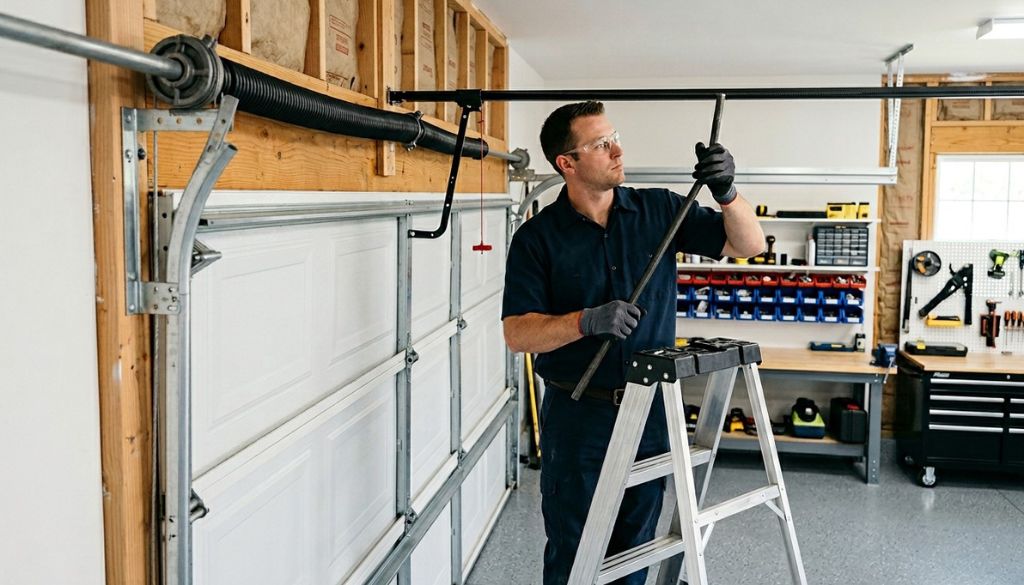
Garage door spring replacement is among one of the most usual solution telephone calls and one of the least ideal for do it on your own function. The risk is not exaggerated. Torsion springs save a significant amount of power. Releasing or winding that power incorrectly can create extreme injury. Experts approach this task with winding bars, securing pliers, appropriate measurements, and an understanding of cycle rankings, shaft problem, and balance.
A good technician does greater than switch the broken springtime. They verify the cable dimension, inside diameter, and size, after that match the replacement to the real door weight and height. If the door previously had the wrong springtime, changing it with the exact same inaccurate dimension only lengthens the trouble. The repair should end with the door stabilized so it can hug mid traveling without drifting up or collapsing down. That equilibrium check matters as high as the brand-new spring itself.
It is also common for professionals to recommend changing both springs on a 2 springtime system when one fails. That recommendations is generally sound. Springs installed together have a tendency to put on with each other. If one has actually gotten to completion of its cycle life, the 2nd is typically not far behind.
When the garage door opener is condemned unfairly
Openers get criticized for every little thing since they are the visible machine individuals connect with. In truth, several opener issues begin elsewhere. If the door is heavy, misaligned, or dragging in the tracks, the opener is compelled to compensate. Gradually, that results in stripped equipments, overheated motors, or travel problems.
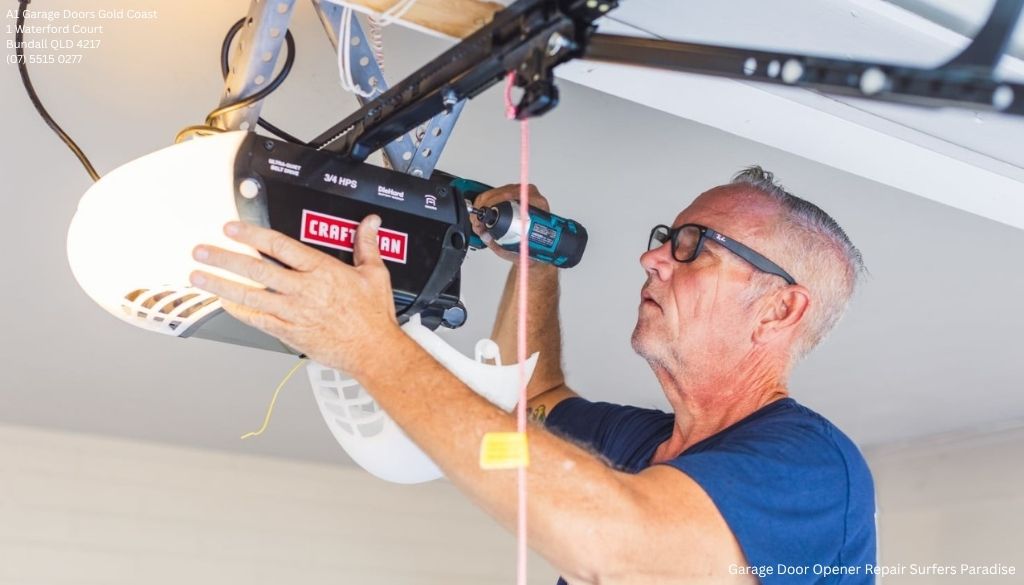
That said, garage door opener failures do occur. Older chain drive systems frequently end up being loud as gears and drive components use. Belt drive versions are quieter, yet their electronics and logic boards can still fail with age or power surges. Wall surface buttons wear out, remotes shed programming, and limitation setups wander. None of these signs and symptoms instantly imply the entire opener needs to be replaced.
An experienced specialist typically starts with the most basic checks. Is power getting to the system? Are the image eyes aligned and tidy? Has the emergency situation release been partially engaged? Is the door itself relocating freely by hand with the opener detached? That last test discloses a whole lot. If the door binds by hand, mounting a new opener will not solve the underlying issue.
Modern openers also consist of pressure settings and take a trip modifications that can be knocked senseless of calibration. A door that reverses prior to closing all the way may have sensing unit trouble, excessive rubbing, or a traveling limit established too short. A door that closes and pops back open might be meeting resistance at the floor due to the fact that the close force is set too reduced or the flooring is uneven. The fix is usually accurate adjustment, not replacement.
There are times when substitute is the smarter move. If an opener is fifteen to twenty years old, lacks modern security functions, and needs significant inner components, a new device commonly makes more sense than covering old technology. Existing models use quieter operation, battery backup on some systems, and app based monitoring that numerous owners truly discover valuable. Still, experts understand the difference in between a broken equipment and a healthy opener attempting to drag a negative door.
Doors that come off track or move unevenly
A door that shows up jagged is usually an indication to quit utilizing it quickly. Irregular movement is not just an annoyance. It often indicates a cable television issue, a curved track, damaged rollers, or a springtime imbalance. Continuing to run the door can turn sections, damages the opener arm, or dispose the door totally out of the tracks.
This is just one of those cases where experience helps tighten the reason quickly. If one side is higher than the various other, a lifting wire might have slid from the drum or frayed enough to lose tension. If rollers are bulging, the track might be curved from influence or spread aside from loose bolts. I have actually also seen situations where a vehicle bumper clipped the lower section simply sufficient to change the geometry and produce a chronic monitoring problem.
Professionals generally secure the door initially, due to the fact that the instant concern is preventing even more activity. After that they inspect cord drums, end bearing plates, track spacing, roller stems, and joint problem. If a cable television has come off as a result of a spring concern, just rewinding the cord will not hold. The spring balance must be corrected first. If the track is bent, there is a judgment phone call. Minor bends can often be remodelled. Extreme kinks or twisted vertical track sections need to be replaced, not hammered into a rough approximation.
Commercial garage door repair crews see much more significant versions of this issue on loading doors and high cycle systems. Forklift website traffic, repeated effects, and much heavier door sections can magnify placement issues swiftly. The standard principle continues to be the same: support the system, recognize what lost stress or placement, after that restore balance prior to placing the driver back into service.
The tiny parts that develop large noise
Not every solution call entails a dramatic failing. Many begin with a simple grievance: the door has gotten loud. Sound may appear cosmetic, but it is commonly the very first valuable warning. Squealing indicate dry rollers or joints. Grinding can imply bearings are breaking. Balanced clacking often recommends a loosened joint, a fractured roller, or a chain with poor tension.
A well tuned door has a distinctive audio. You listen to activity, but not distress. When that audio adjustments, specialists pay attention thoroughly since the noise place commonly exposes the failing part. Nylon rollers with worn bearings, for instance, can rattle and babble long before they confiscate. Steel rollers are durable, but if ignored they can telegraph every resonance with the track. Joint knuckles can lengthen Home page gradually, permitting side to side play that turns up as shake and slap when the door rounds the bent section of track.
The solution is hardly ever complicated, yet it needs to be thoughtful. Great lubrication aids, however not every item belongs on every component. Experts use garage door certain lubes on springs, hinges, and bearings, while staying clear of heavy grease that draws in dirt or gums up in cold weather. Rollers that have fractured wheels or loosened bearings are replaced, not just sprayed. Loosened equipment is tightened to the appropriate degree, due to the fact that over tightening up can distort braces or strip placing points in timber framing.
One useful reality home owners do not always hear is that some doors are just noisier deliberately. An uninsulated steel frying pan door with an older chain drive opener will certainly never ever sound like a costs shielded door on a belt drive system. Professionals can minimize sound substantially, however they will additionally establish sensible expectations.
Sensors, safety turnarounds, and shutting problems
If a door opens up great however rejects to close, security sensors are high on the suspect list. These image eyes rest near the floor on either side of the opening. Their task is simple and important: if the beam is interrupted, the door must not shut. Dirt, resonance, imbalance, and sunlight glare can all interfere with that signal.
A homeowner might see strobe lights on the sensor or on the garage door opener head. Typically the service is as simple as cleaning the lenses and realigning the brackets. But repeated sensing unit troubles can point to a much deeper problem, such as loosened low voltage circuitry, a brace that shifts each time the door vibrates, or water intrusion near the link points.
Experts likewise identify sensor issues from pressure relevant turnarounds. If the door starts down, satisfies resistance, and returns to the employment opportunity, the safety and security system might be responding appropriately to friction or an obstruction. That can happen with puffy bottom seals, debris in the track, or a door that is out of equilibrium. It is one factor exact diagnosis issues. A professional that just adjusts the sensing units might miss the real source of the reversal.
Panels, seals, and the damages you can see
Some garage door concerns are visible prior to they are mechanical. Dented panels, broke home windows, torn bottom seals, and warped weatherstripping all affect performance. A damaged panel does more than harmed visual appeal. If a section is curved enough, it can alter exactly how rollers track and exactly how hinges bring the load.
Panel replacement is possible on lots of designs, but it is not constantly affordable. The technician has to consider the age of the door, whether matching areas are still available, and whether shade fade will certainly make a brand-new panel stand out. Sometimes a repair work is reasonable. Occasionally full garage door setup is the far better long-term choice, especially if several areas are compromised or the door has numerous other worn components.
Weather seals should have more focus than they usually obtain. A torn bottom seal allows water, dirt, pests, and winter air. Side and top seals influence insulation and can lower rattling. Changing them is not attractive, yet it is usually one of the most cost effective ways to improve exactly how the door performs.
What specialists check that home owners normally miss
A professional solution go to is usually important due to the fact that qualified eyes catch creating issues prior to they end up being failures. Throughout a regular household garage door repair consultation, a technician may see a cord beginning to battle royal, a center bearing plate moving, or roller stems revealing excessive play. None of those products might be triggering immediate problem, but every one can come to be the following emergency call.
Here are a few indications that normally validate a solution telephone call sooner as opposed to later:
- The door feels much heavier than typical when run manually One side rises unevenly or the door looks jagged in the opening The opener pressures, hums, or turns around without a clear obstacle You hear a sharp bang from the garage adhered to by poor operation Cables look loose, frayed, or out of their regular position
That type of very early intervention often conserves money. Replacing worn rollers and remedying balance is far less costly than changing a burned out opener plus damaged track and joints after months of strain.
The distinction in between property and business repairs
The principles overlap, yet the context adjustments. Residential garage door repair generally concentrates on ease, safety and security, and day-to-day integrity for a household. Business garage door repair includes operational stress. Downtime can impact shipments, staffing, and client access. Industrial doors are commonly larger, cycle extra often, and may be integrated with gain access to control systems, dock tools, or fire rated assemblies.
That changes repair service strategy. A storehouse door with an unsuccessful spring may need a momentary strategy to maintain operations relocating while components are sourced. A rolling steel service door might require a various capability than a sectional overhead door in a home garage. The equipment is heavier, the tolerances are tighter, and the repercussions of incorrect repair service can be more significant.
It also changes upkeep top priorities. In a home, a noisy hinge can wait a week. In a service, a slow-moving operator or failing lower bar edge might need same day focus due to the fact that safety and workflow get on the line.
When fixing is clever, and when substitute is smarter
Not every aging system ought to be kept alive indefinitely. Experts weigh several variables prior to recommending fixing versus replacement: door age, insulation worth, part availability, architectural problem, and the collective price of repetitive solution. A solitary damaged spring on an otherwise sound door is a simple fixing decision. A twenty years of age door with rusted sections, stopping working rollers, outdated tracks, and an opener on obtained time is a different conversation.
There is likewise a quality of life aspect. A new garage door installment can improve energy efficiency, lower sound, and significantly change the look of a home. For some proprietors, the tipping point is not one devastating failure however a collection of smaller aggravations that build up. If a door needs a panel, an opener, and Garage door spring substitute within a short window, several determine their cash is much better invested in a fresh system with a warranty.
Good service providers do not press substitute when a simple repair service will do. They explain the trade offs plainly. Often the truthful answer is, fix it now and allocate substitute in a year or 2. That sort of support is worth a lot.
Sensible maintenance that in fact helps
Garage doors do not require constant attention, however they do benefit from basic treatment. The secret is to focus on observation rather than dangerous adjustment. Homeowners can securely do a whole lot by paying attention to exactly how the system appears and moves.
A simple maintenance routine usually consists of these actions:
- Watch the door open and close a few times, and note any new jerking, dragging, or crooked travel Keep the tracks clear of debris, but do not coat them with grease Clean the security sensing unit lenses and ensure the brackets have not been bumped out of line Lubricate joints, springtimes, and bearings with an item intended for garage doors Test the opener's reversal function according to the manufacturer's instructions
What house owners must refrain from doing is similarly vital. Do not loosen springtime equipment, effort cord resets, or keep requiring an out of balance door with the opener. That is exactly how a minor problem becomes a significant repair.
What a strong fixing visit looks like
The best garage door repair is not rushed. A strong service technician inspects the entire system, not just the evident damaged component. They ought to separate the opener and examination door equilibrium by hand. They must examine tracks, rollers, joints, wires, springtimes, and installing equipment. If an opener issue is entailed, they must examine the door initially before advising machine replacement.
They should likewise connect clearly. If the springtime is damaged because the door was improperly stabilized from the start, that must be discussed. If the lower panel is structurally weak and may not hold up after fixing, that ought to be claimed plainly. There is a functional sincerity in great trades function. You desire the individual at your garage to tell you what is urgent, what can wait, and what is likely to fall short next.
That is particularly real with repeat problems. A door that maintains consuming rollers or slipping cables is usually informing a larger story. Maybe the track spacing is wrong. Perhaps the springtime sizing was never right. Possibly the framing has actually shifted enough to impact alignment. Specialists resolve those root causes. Jumble fixes just postpone the next service call.
A garage door is not one of the most attractive system in a building, however it is just one of the most made use of. When it falls short, the trouble is immediate. When it is repaired correctly, the outcome feels almost unnoticeable, which is precisely the factor. The door moves smoothly, seals correctly, and lifts with less strain than you realized it had been bring. That is what professional work looks like in this trade. It recovers the sort of typical operation individuals stop noticing, till the day they do not have it.